




Additional functions in comparison to basic instrument DTSL
Memory for 60.000 readings
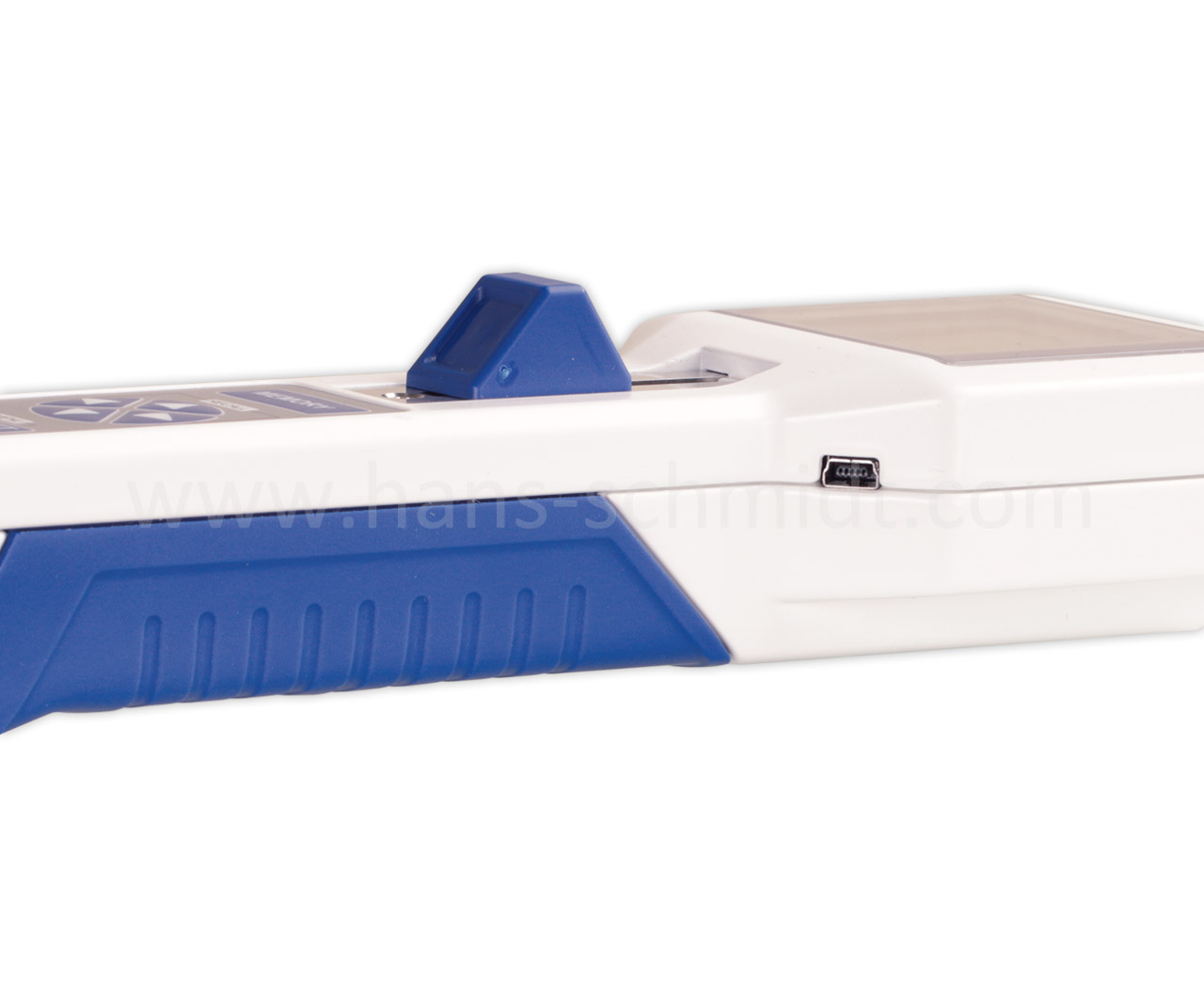
USB interface
Tension meter DTXL with 5 different memory modes:
Mode S: statistics only
Mode H: storage of the X-Y-diagram for reviewing after finishing a series of measurement (e.g. short time spooling)
Mode C: continuous logging over a user set time and different series of measurement (2 Hz)
Mode F: fast, continuous logging over a user set time and different series of measurement (1000 Hz)
Mode D: storage of single readings and statistic
Mode S: statistics only
Mode H: storage of the X-Y-diagram for reviewing after finishing a series of measurement (e.g. short time spooling)
Mode C: continuous logging over a user set time and different series of measurement (2 Hz)
Mode F: fast, continuous logging over a user set time and different series of measurement (1000 Hz)
Mode D: storage of single readings and statistic
1 factory adjustment, as well as 10 material memory locations for customer made calibrations
For memory modes S, C and F, a trigger point can be set (e. g. 100 cN) at which the tension meter begins recordig data
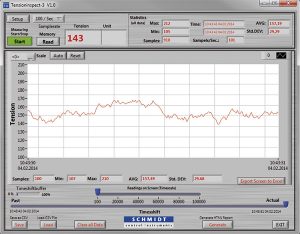
Software Tension Inspect 3 for displaying real-time readings on a PC and to store them into a file
Function of basic instrument DTSL
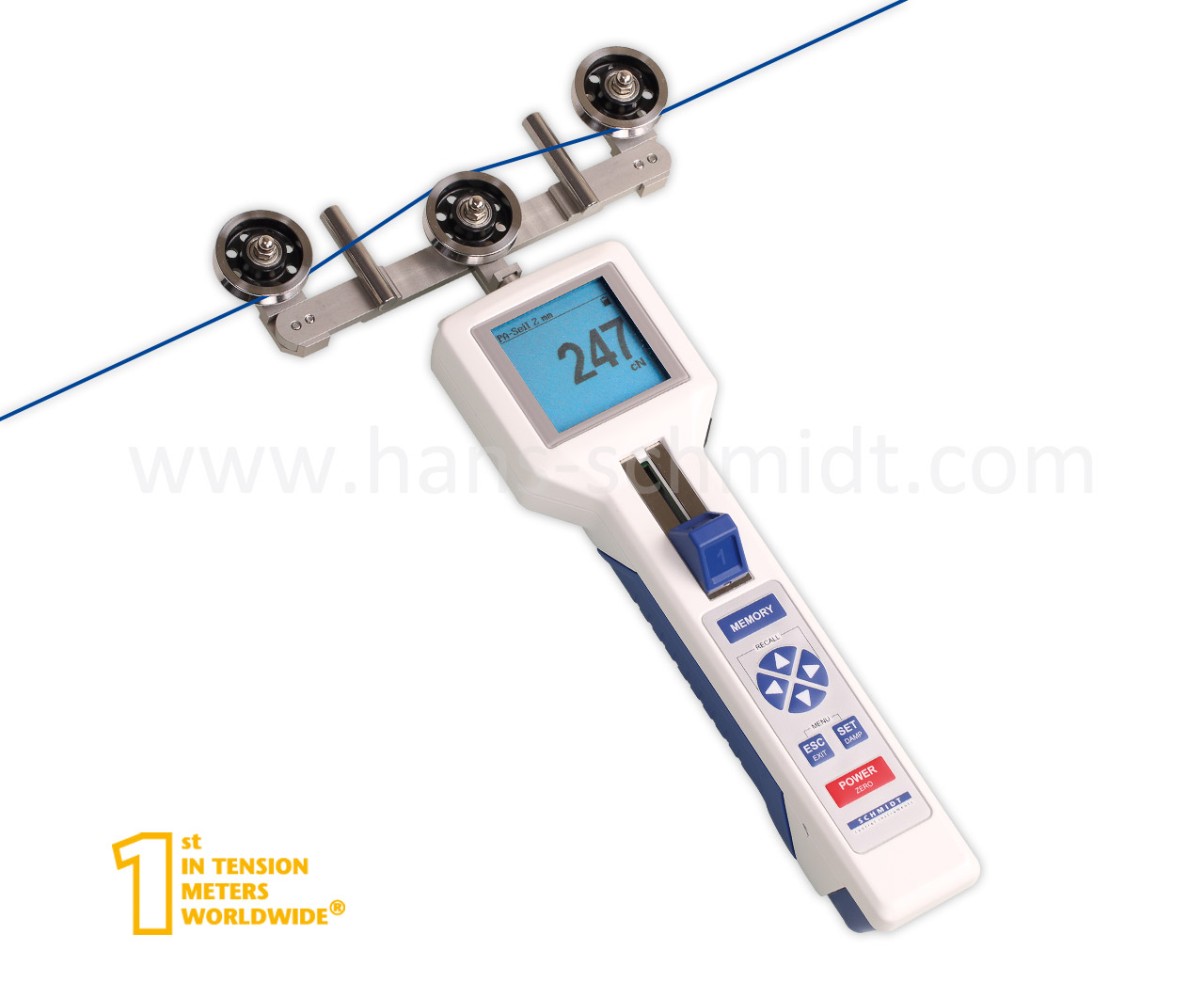
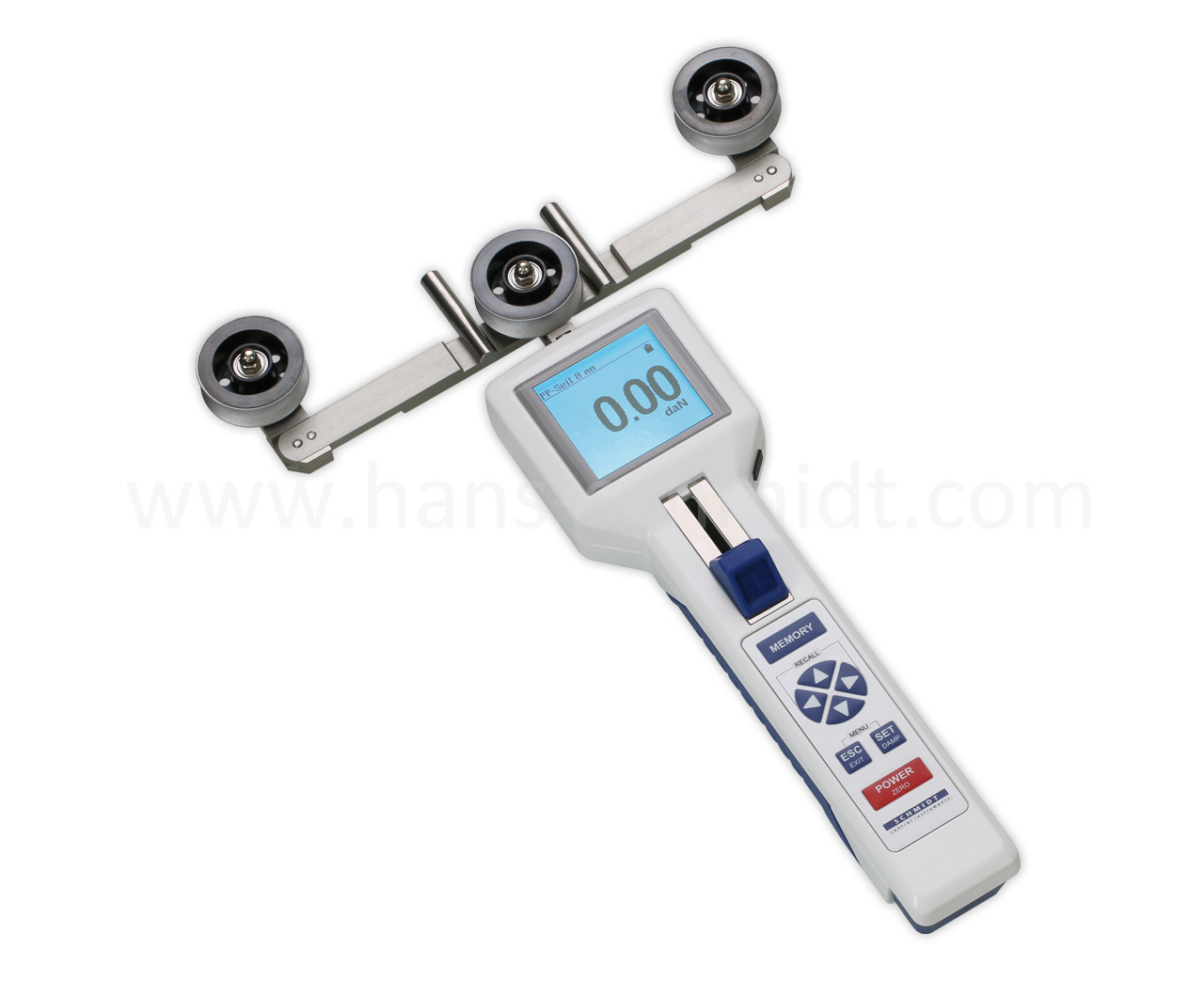
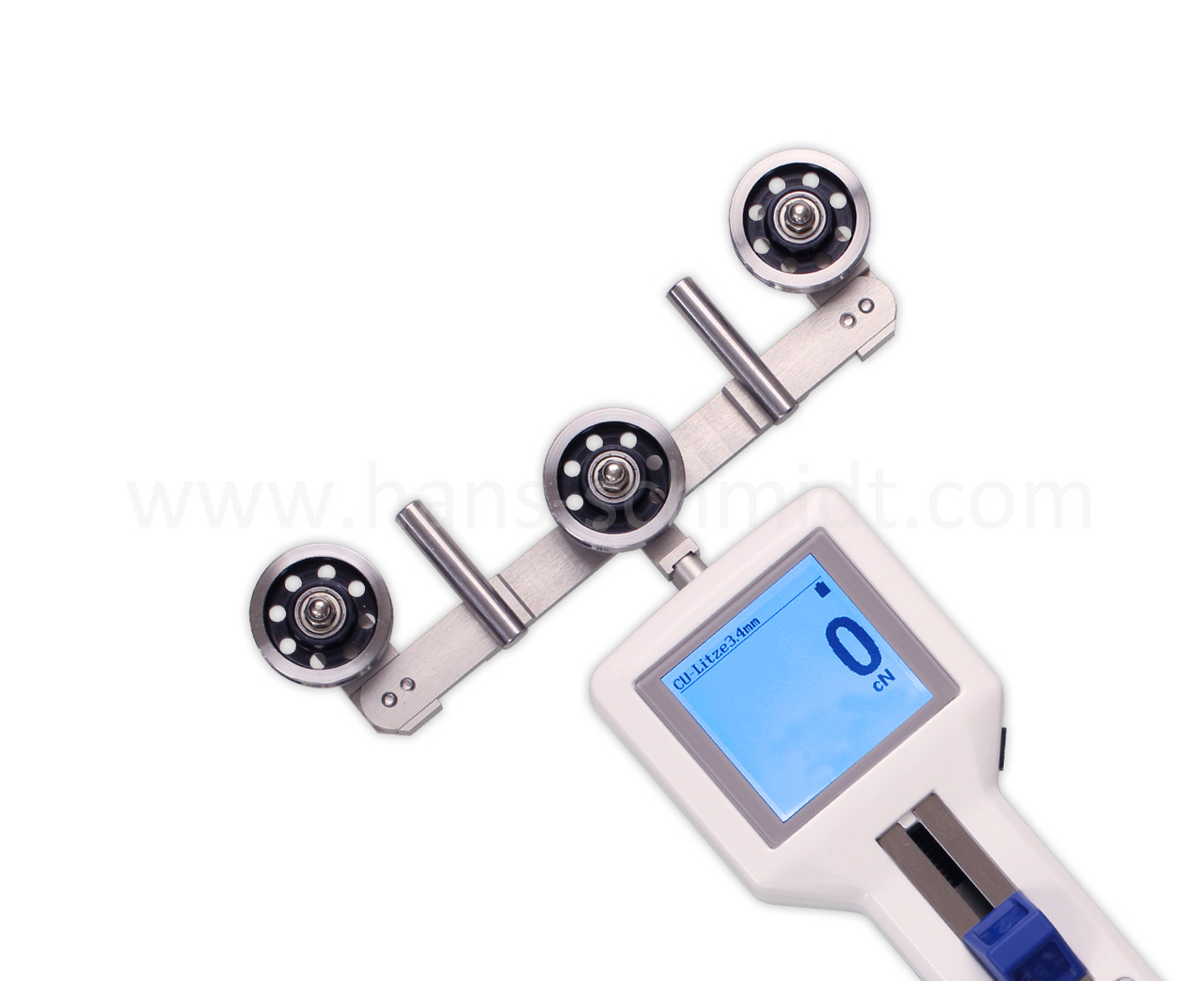
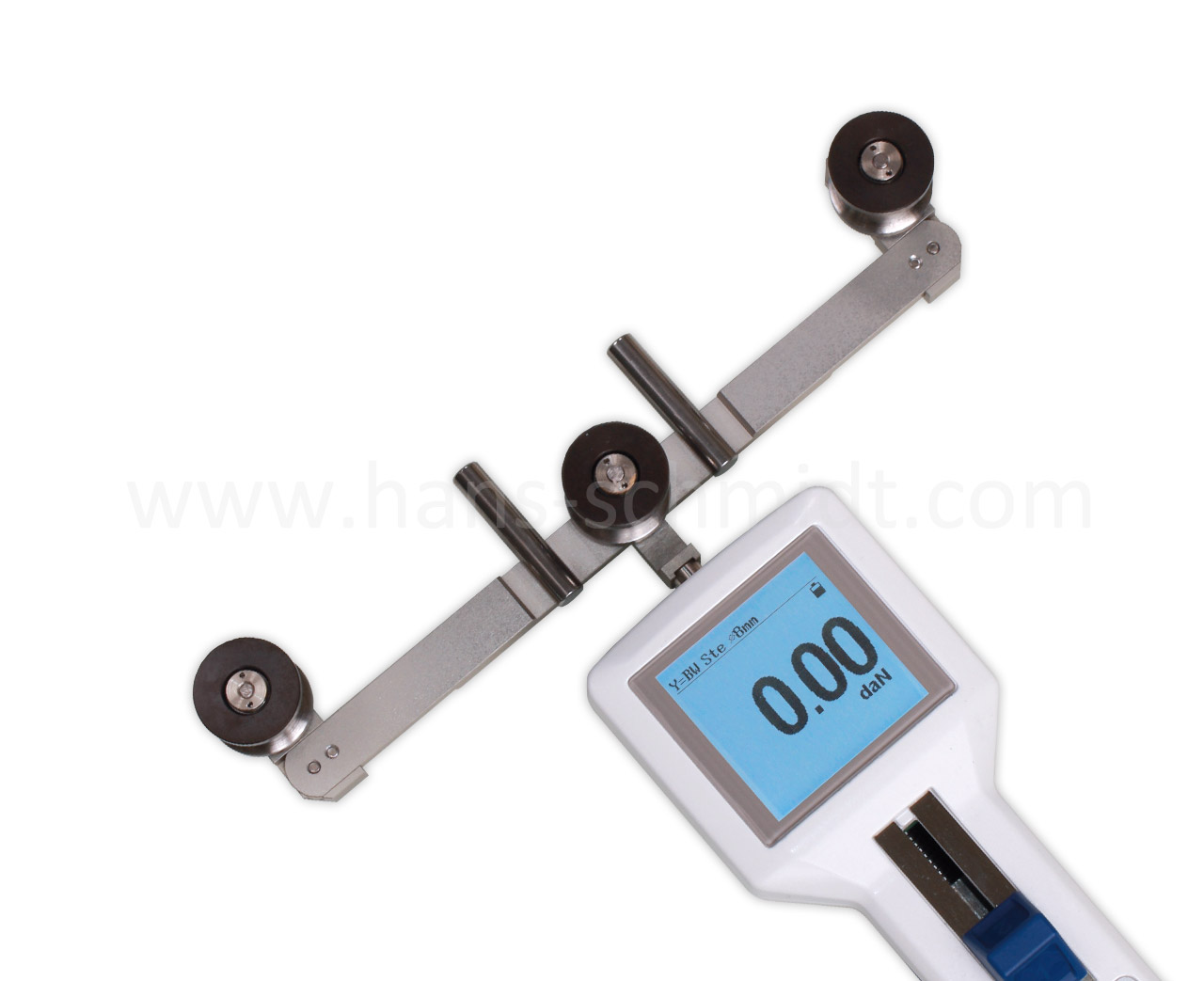
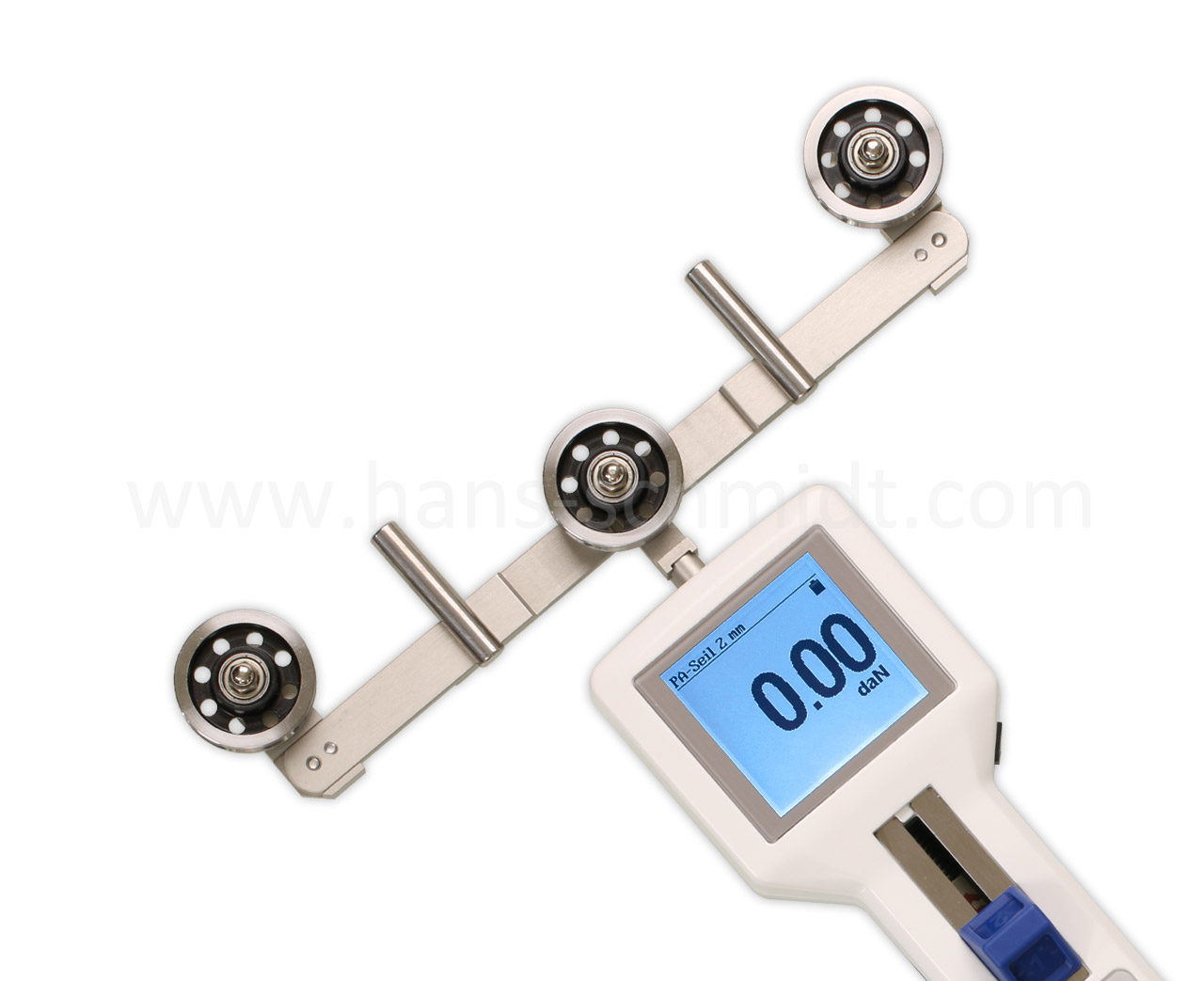
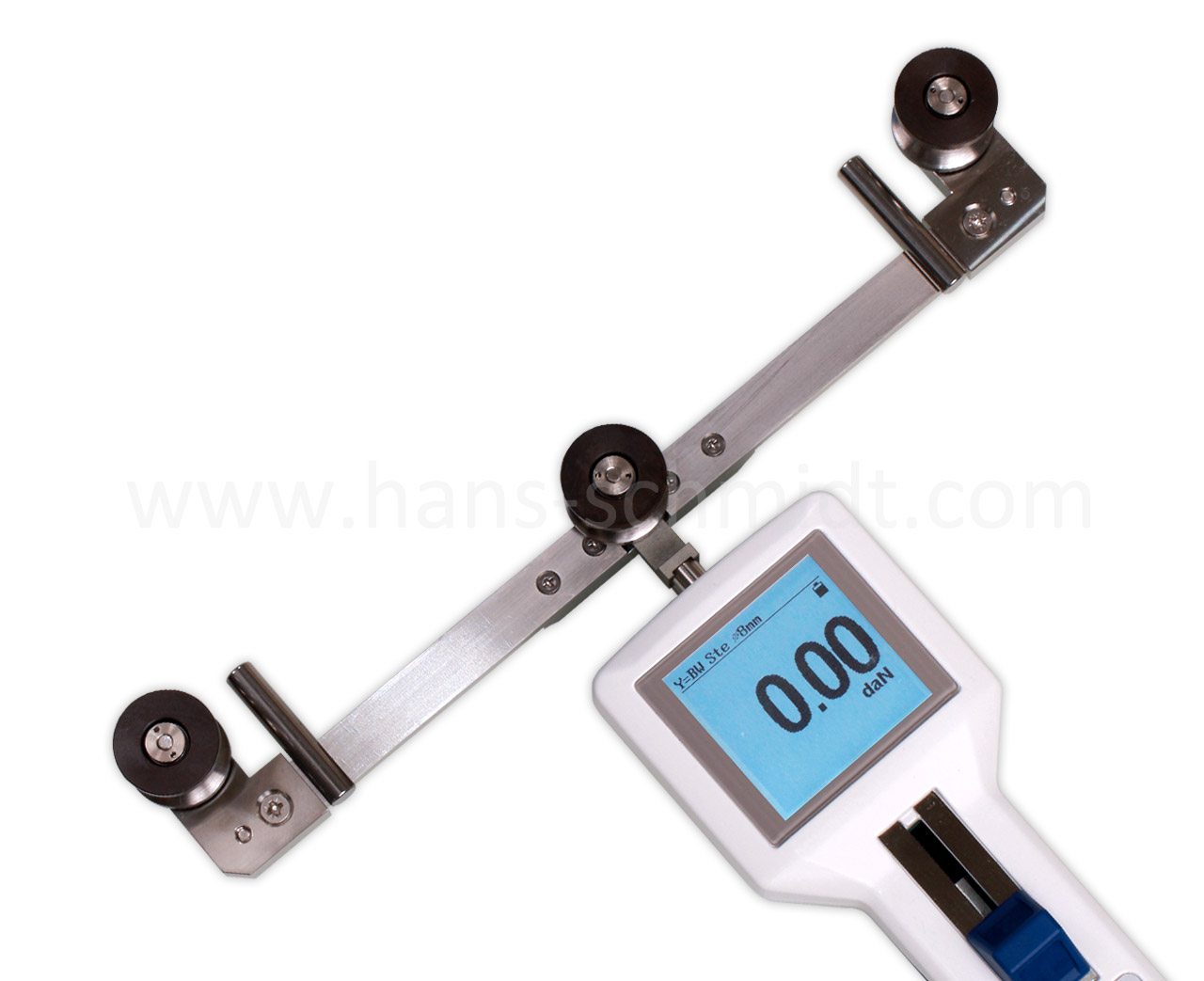
Ball-bearing mounted guide rollers
– V-grooved (for material with max. 4 mm Ø)
– U-grooved (for material with 3 up to 15 mm Ø)
– tape grooved (for material with max. width of 10 mm)
– V-grooved (for material with max. 4 mm Ø)
– U-grooved (for material with 3 up to 15 mm Ø)
– tape grooved (for material with max. width of 10 mm)
Large roller diameter for minimized material deflection
Special guides on the bracket assembly permit easy material acquisition
Tension meter DTXL with large, colour TFT Display
3 different display modes:
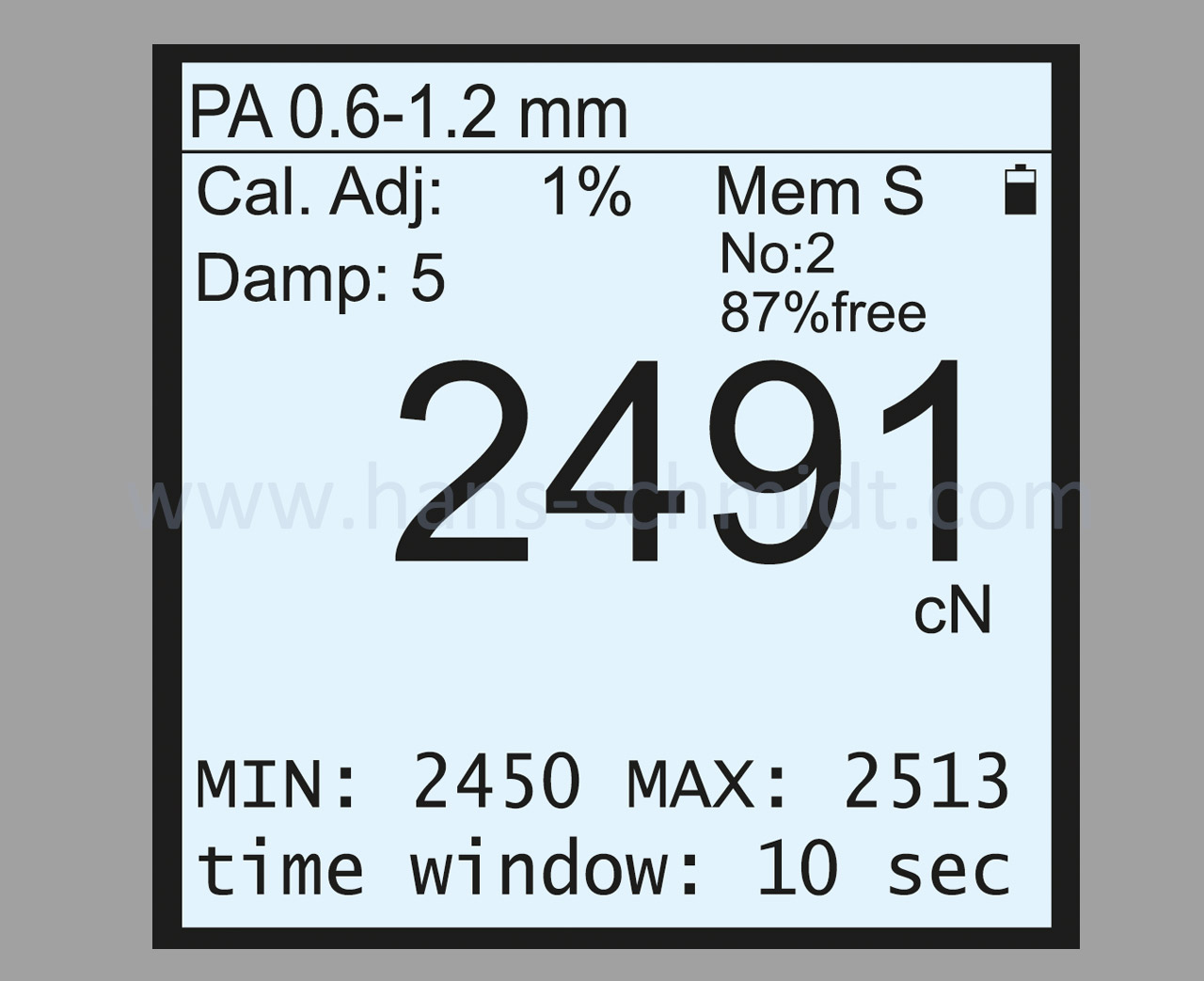
– numeric
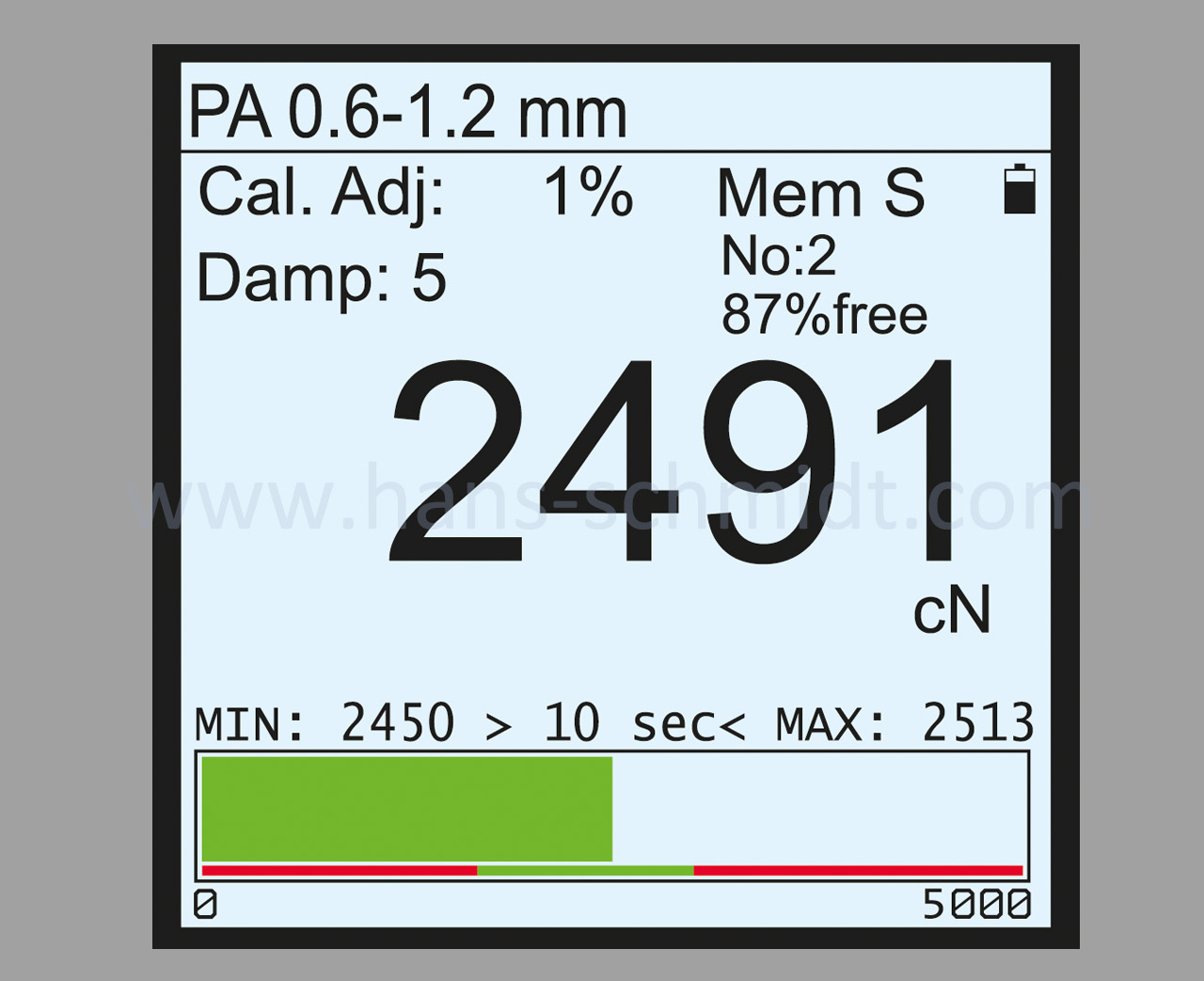
– numeric with bargraph
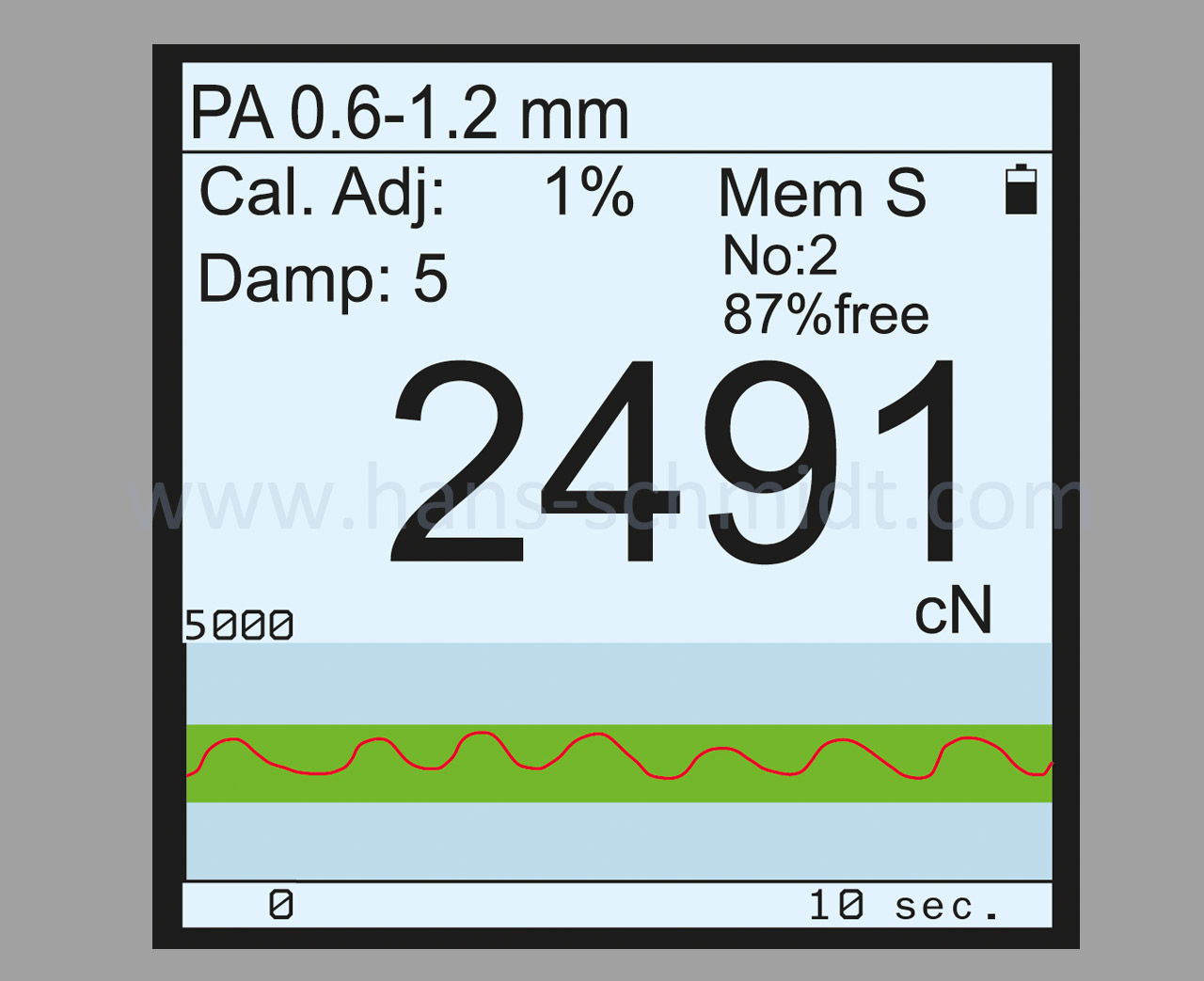
– numeric with graph (Time-Tension)
– numeric
– numeric with bargraph
– numeric with graph (Time-Tension)
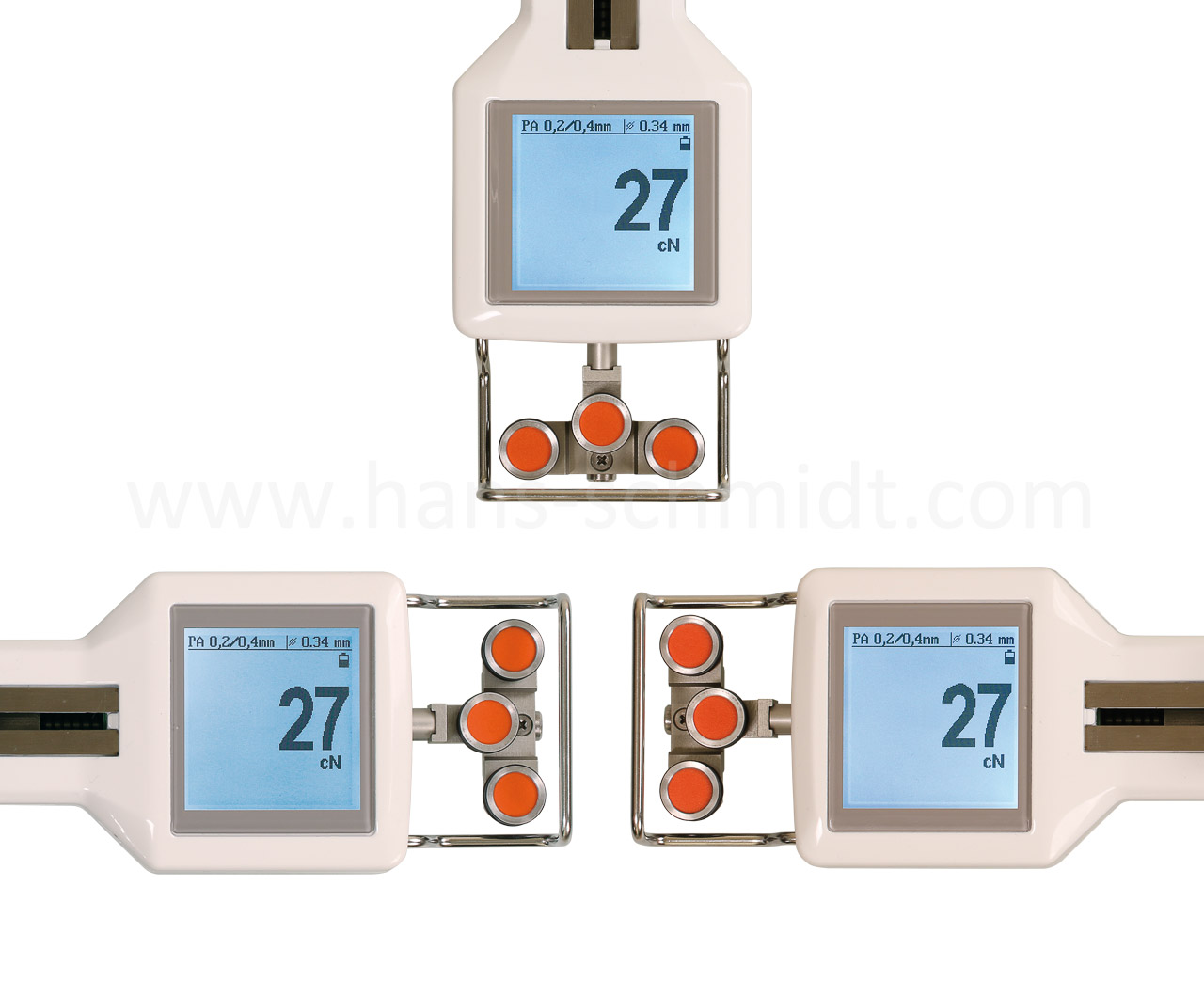
The display rotates in 90° steps for better reading
New, unique, force reduced material catching system
Automatic „Zero-Setting“ in each measuring position using a special sensor technique
1 factory adjustment, as well as 4 material memory locations for customer made calibrations
Calibration adjustment for fine tuning of the calibration if material differs from the used calibration material
Programmable MIN- and MAX alarms: indication in the display, if reading is out of limits
The MIN and MAX reading will be shown in the Display for the adjusted time window (2 – 60 seconds).
High speed data sampling (internal 8 kHz) and recording of MIN-, MAX-, last reading, average and standard deviation
Selectable units of measurement: cN, daN, g, kg, N, lb
Menu set-up in English or German language
Flexible menu set-up to meet operators demand
Some functions can be password protected
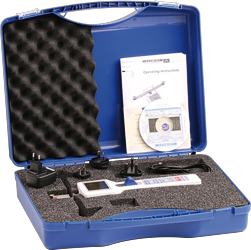
 USB AC adapter with 4 adapters (EU/USA/UK/AUS-NZ) for 100 – 240 V AC and USB cable for loading the accumulator and data transfer to a PC.
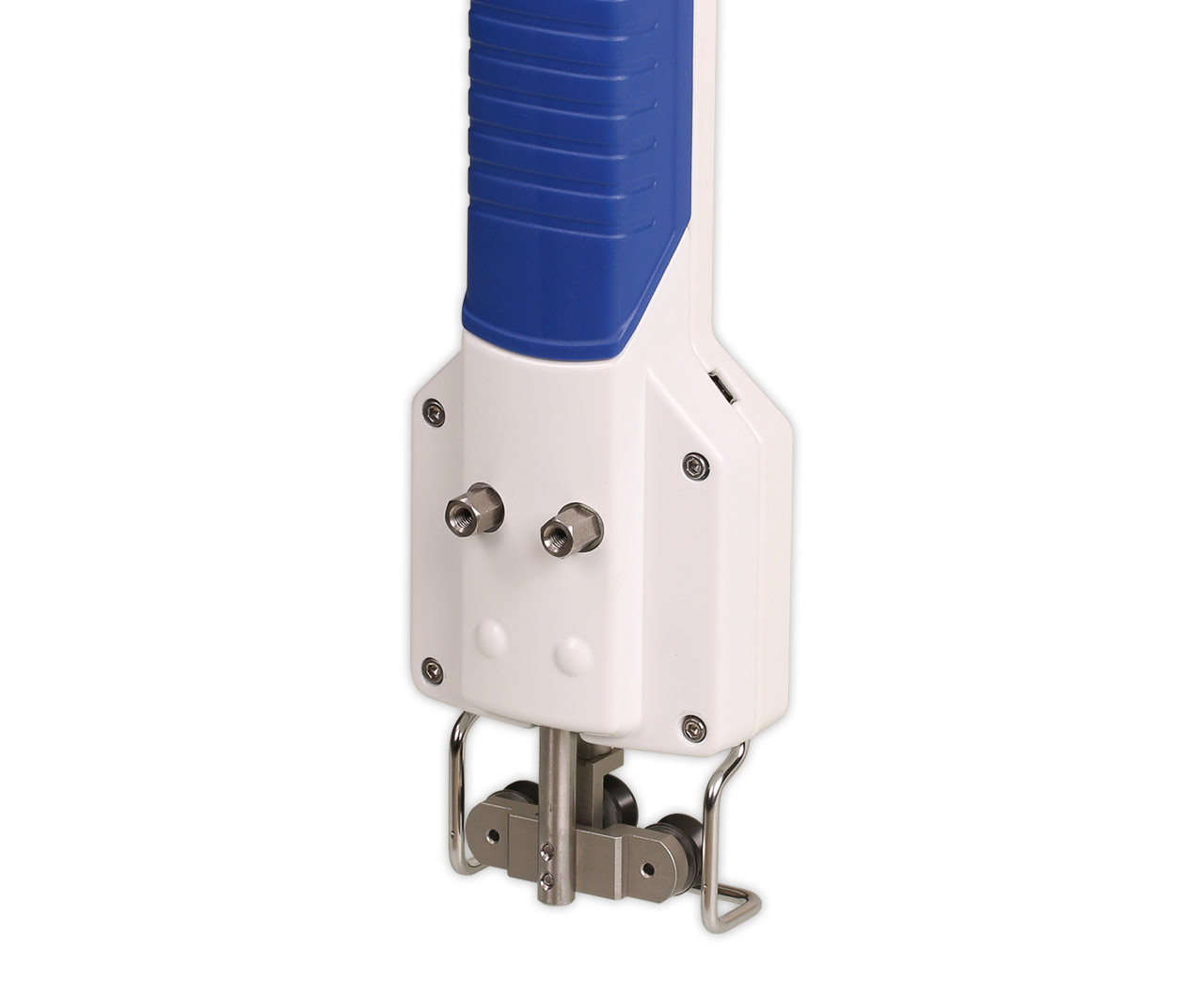
 To mount the gauge for online use, the housing can be equipped with mounting threads. There are to bolts with M5 female thread on the rear side. This feature cannot be installed afterwords.